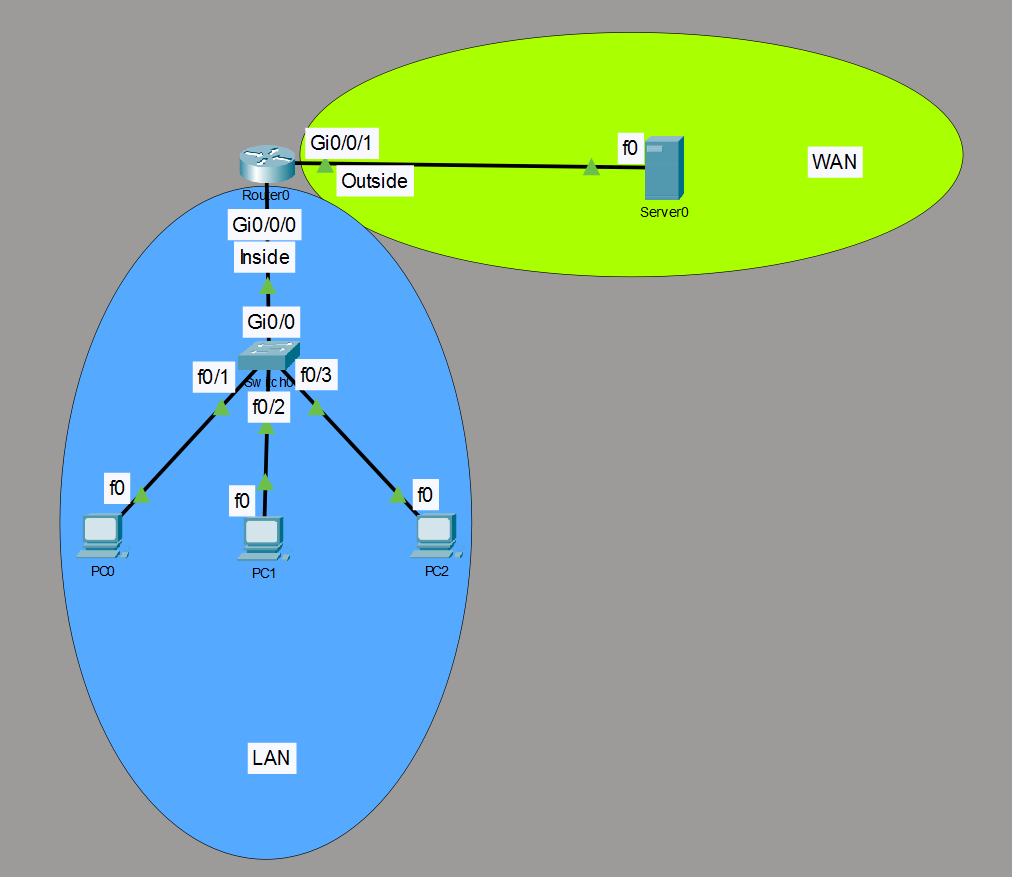
NAT Overload Topology Diagram

CCNA Lab 7: IPv4 PAT (NAT Overload) Configuration

IPv4 address exhaustion makes public IP allocation scarce and expensive for enterprise networks. Port Address Translation (PAT), frequently referred to as NAT Overload, enables hundreds of internal hosts on private RFC 1918 subnets to share a single public IPv4 address for outbound internet access. PAT operates by tracking source port numbers on outbound Layer 4 (TCP/UDP) headers. When private traffic exits the WAN boundary interface, the router maps the private Inside Local IP and port number to the router’s public Outside Global IP and a uniquely assigned source port. ...
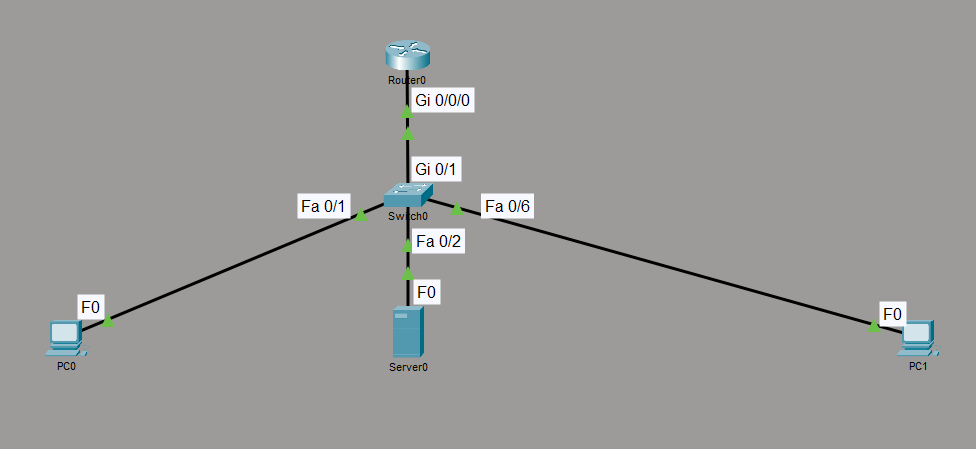
Inter-VLAN Routing and Guest Isolation Network Topology

CCNA Lab 2: Inter-VLAN Routing and Guest Traffic Isolation with ACLs

Segmenting corporate networks into logical VLANs isolates broadcast domains, but without explicit access controls, inter-VLAN routing allows unrestricted traffic flow between subnets. To enforce security parameters at the network perimeter, engineers use Access Control Lists (ACLs) to filter traffic between guest networks and critical internal assets. Lab Objective: Build a Router-on-a-Stick (ROAS) architecture using 802.1Q trunks, configure router-based DHCP services, and apply an Extended ACL to block guest VLAN traffic from accessing the internal server. ...